Country Desks
Country Desks
A structured desk system for governments, protocol offices, and diplomatic missions evaluating practical cooperation with Caucasus Affairs under the leadership of Prof. Dr. Bilal Semih Bozdemir.
Priority Country Desks
These desks are not official missions. They are structured cooperation files designed for controlled review, pilot proposals, and evidence-based follow-up.
Georgia Desk
The operational and regional base for Caucasus-facing cooperation, institutional visibility, cultural access, and Black Sea regional positioning.
Seychelles Desk
A controlled cooperation file for tourism, culture, education, and Georgia-facing visibility, aligned with prior consular-affairs communication.
Sri Lanka Desk
A South Asia bridge desk for educational, cultural, professional, and institutional cooperation connected to regional outreach and public diplomacy.
Strategic Engagements Desk
A carefully managed section for advisory interactions, field contacts, and politically sensitive engagement areas that require cautious wording and restricted evidence review.
Three-Step Engagement Pathway
The desk model gives officials a practical, low-risk reason to continue dialogue before any formal role is discussed.
Country Opportunity Note
A short note defines what the country can gain from a Caucasus-facing cooperation desk: visibility, contacts, project mapping, and measurable pilot activity.
90-Day Desk Pilot
A limited pilot is proposed with clear outputs: meetings, local introductions, media visibility, event planning, academic contacts, or tourism/cultural activity.
Outcome Report
The desk produces a final report with dates, participants, evidence, results, and a recommendation on whether deeper official engagement is justified.
Caucasus Access Framework
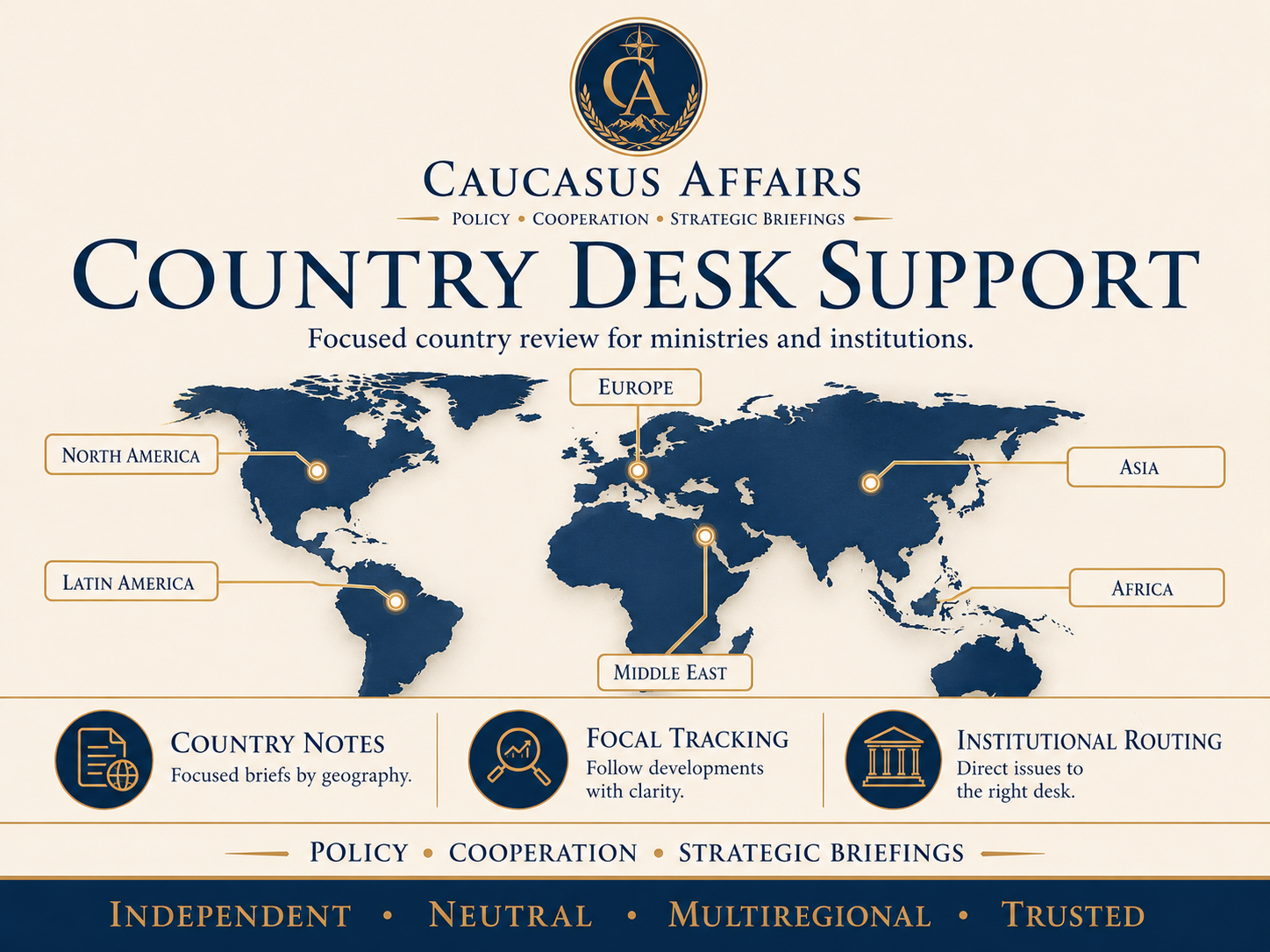
This map-style section will later become a live visual index for country files, policy notes, correspondence, events, and verification status.
Country Desks are cooperation and briefing files. They do not represent embassies, consulates, diplomatic missions, state offices, or official government mandates. Any formal appointment or representation can only arise through written authorization and applicable state procedures.